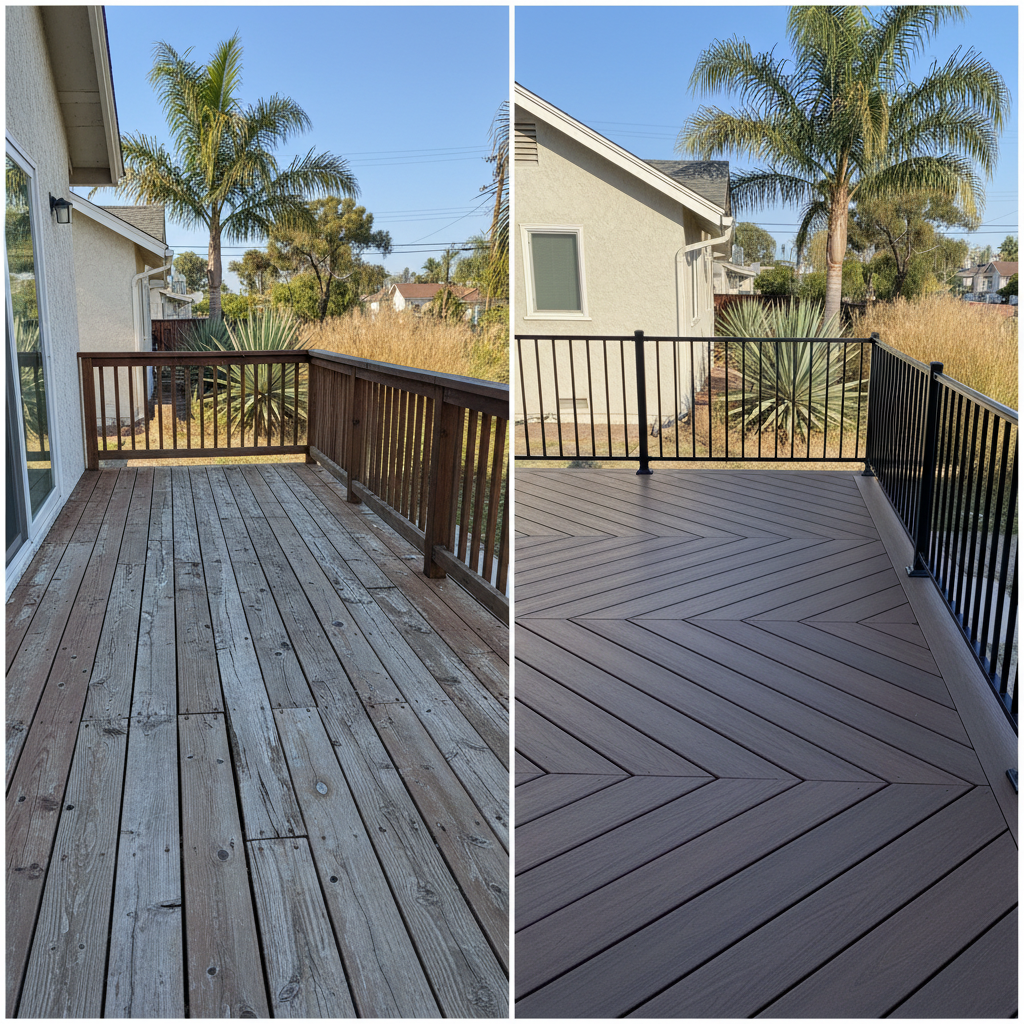
So, you're looking at composite decking for your backyard here in Long Beach. Smart move. It's a great alternative to wood, especially with our coastal weather and the sun beating down most of the year. But when you start digging, you'll quickly run into a choice: capped composite or uncapped composite. What's the deal with that, and which one's right for you?
The OG: Uncapped Composite Decking
Let's start with uncapped composite. This is the original stuff, the first generation of composite decking. It's typically a mix of wood fibers and recycled plastic, all blended together and extruded into a board. Think of it like a big, dense cookie.
The big draw for uncapped back in the day was that it didn't rot, splinter, or need staining like wood. That was a huge step up. But it wasn't perfect, especially for places like Long Beach with our strong UV rays and occasional humidity. Here's what I've seen:
- Appearance: It looks pretty good initially, often with a wood-grain pattern. But because those wood fibers are exposed to the elements, it tends to fade over time. Not just a little, but noticeably. It also can get stained pretty easily from things like spilled BBQ sauce, red wine, or even just leaves breaking down on the surface.
- Durability: It's tough against rot and insects, no doubt. But that exposed wood fiber means it can absorb moisture. This can lead to mildew and mold growth, especially in shadier spots or if you've got a lot of moisture around, like near a pool or in a damp backyard in Naples. It can also expand and contract more than capped boards.
- Maintenance: You won't be sanding or staining, which is great. But you'll definitely be scrubbing. You'll need to power wash it regularly to keep mold and mildew at bay, and you'll be fighting stains pretty often.
- Cost: Generally, uncapped composite is the more affordable option upfront. It's the entry-level composite.
The Evolution: Capped Composite Decking
Now, let's talk about capped composite. This is the second and now third generation of composite decking, and it's what most reputable manufacturers, including the brands we use at Long Beach Deck Concepts, are pushing these days. Imagine that same wood-plastic core, but now it's got a durable, protective shell wrapped around it – kind of like a candy coating.
This cap is usually made from a high-performance polymer. It's fused to the core during manufacturing, creating a board that's much more resilient. This is where you really see the benefits for a place like Long Beach.
- Appearance: This is where capped really shines. The cap allows for much more realistic wood-grain patterns and a wider variety of colors that stay vibrant for years. That cap protects against UV fading, so your deck will look great for a long, long time. Stains? They wipe right off the cap, making cleanup a breeze.
- Durability: The cap provides an impermeable barrier. This means no moisture absorption into the wood fibers, which dramatically reduces the chances of mold and mildew. It's also much more resistant to scratching and scuffing, which is a big deal if you've got kids, pets, or just like to entertain a lot. It's less prone to expansion and contraction too, leading to a more stable deck surface.
- Maintenance: This is the dream. A simple sweep and occasional wash with soap and water is usually all you need. No heavy scrubbing, no power washing every month to fight off green patches. It's truly low maintenance.
- Cost: Capped composite is more expensive upfront than uncapped. You're paying for that advanced technology and the added protection.
My Recommendation for Long Beach Homeowners
Alright, so which one should you choose? For homeowners in Long Beach, my clear recommendation is capped composite decking. Hands down.
Here's why: We live in a beautiful, sunny place. That sun, while great for beach days, is brutal on unprotected materials. The UV resistance of capped composite is a game-changer for keeping your deck looking good for decades. Plus, our coastal air, even if it's not super humid all the time, still encourages mildew and general grime. The easy-clean surface of capped boards means you'll spend way less time cleaning and way more time enjoying your outdoor space.
Yes, it costs more upfront. I get that. Budgets are real. But when you factor in the long-term appearance, the minimal maintenance, and the sheer durability against our specific climate conditions, capped composite offers a far better return on your investment. You'll have a deck that stays beautiful and functional with very little effort, letting you get on with enjoying your Long Beach life.
You're building a deck to relax on, not to constantly maintain. That's why capped composite is the way to go for most folks around here.